Digital chemistry for sustainable synthesis.
CDI develops software and carries out contract R&D for organisations that make and study chemicals. We help scientists and engineers choose which molecules to make, find practical synthesis routes, and estimate the energy use and environmental impact of new processes before scale-up. Our tools combine chemical data, physical models and machine learning.
Our work is aimed at the transition to more sustainable chemical manufacture: renewable and circular feedstocks, fewer hazardous materials and less waste, better resource efficiency, and more resilient supply chains.
CDI was founded in 2020 as a spin-out of the University of Cambridge and the Cambridge Centre for Advanced Research and Education in Singapore (CARES), building on a decade of research in the group of Professor Alexei Lapkin. Our chemists, process engineers and software developers work from Singapore, Cambridge (UK) and London.
Meet the team →
Products
Web applications you license and use directly.
-
 COMPASS
finds and compares synthetic routes that meet your constraints.
 Distill
turns papers, patents and records into chemical data you can query, with every fact traceable to its source.
 LumiPredict
predicts a molecule’s properties before you make it.
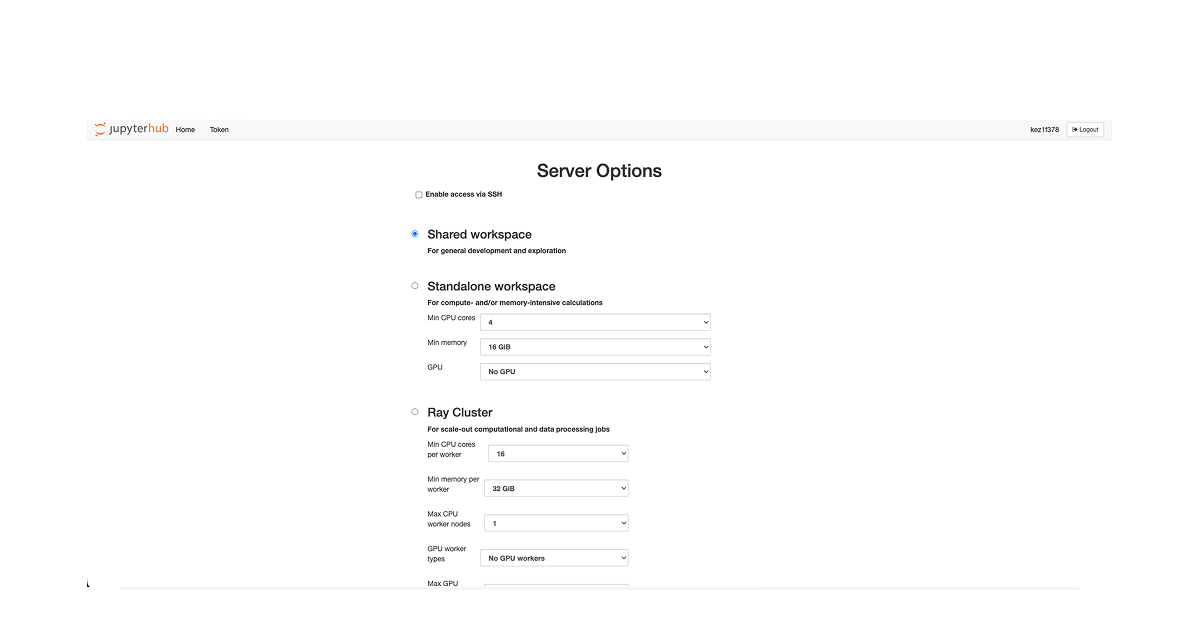 CDI Lab
gives your team cloud computing without the infrastructure.
Contract R&D
Projects built around your data and the decision you need to make, delivered as software your team keeps using.
- Functional molecule designCandidates designed to several criteria at once, with routes to make them.
- Synthesis route studiesRoutes to a target from alternative feedstocks, avoiding specified reagents, solvents or intermediates, in fewer steps, or outside existing patents.
- Digital twins and process modelsModels of a process or a piece of equipment, from first principles and your data, for scale-up and for the energy demand of a new product at an existing site.
- Environmental assessmentEvaluation of the environmental impacts of molecules, synthesis routes and processes, from process inventories to life-cycle impacts.
- Machine learning on your dataModels of properties, reaction outcomes or process behaviour, built on your own records, with the data cleaned and structured first.
- Chemistry knowledge basesYour records made searchable, with every answer traceable to its source, on an ontology and knowledge graph.
Testimonials
In a proof of concept, the CDI team demonstrated that the automated reaction network analysis workflow can accelerate and facilitate route scouting exercises by providing overviews of routes that are consistent with a set of user-defined criteria, such as avoiding halogenated solvents/reagents or preferred use of renewable raw materials.
Markets
Pharmaceuticals
Alternative routes to an active ingredient that avoid specified reagents, solvents or patented steps. Energy use and waste of a new product estimated at your existing site before scale-up. Decades of lab notebooks and batch records made queryable.
Specialty, fine and agrochemicals
Candidates screened for performance, biodegradability, toxicity and ease of synthesis together, before anything is made. Routes from bio-based feedstocks and strategic intermediates, and analogue reactions where no direct precedent exists.
Feedstocks and circular chemistry
Which products can be reached from a given feedstock, and which intermediates carry a circular supply chain. Valorisation studies for a specific by-stream.
Research groups and universities
A managed cloud environment with institutional sign-on and budgets per group. Literature-scale datasets with a source behind every fact. Collaborative and co-funded R&D.
Where a product exists, you can use it directly. Where it does not yet, we build it with you as a project.
Contact
To discuss a product or start a project, write to us at info@cdi-sg.com.
Selected publications
- Chemical data intelligence for sustainable chemistry. J. M. Weber, Z. Guo, C. Zhang, A. M. Schweidtmann, A. A. Lapkin. Chemical Society Reviews 50 (2021) 12013. DOI 10.1039/D1CS00477H
- A knowledge graph framework for digital twins of chemical processes. S. Zhang, J. Zhang, A. A. Lapkin. Nature Chemical Engineering (2026). DOI 10.1038/s44286-026-00392-1
- Reaction impurity prediction using a datamining approach. A. Arun, Z. Guo, S. Sung, A. A. Lapkin. Chemistry–Methods (2023) e202200062. DOI 10.1002/cmtd.202200062